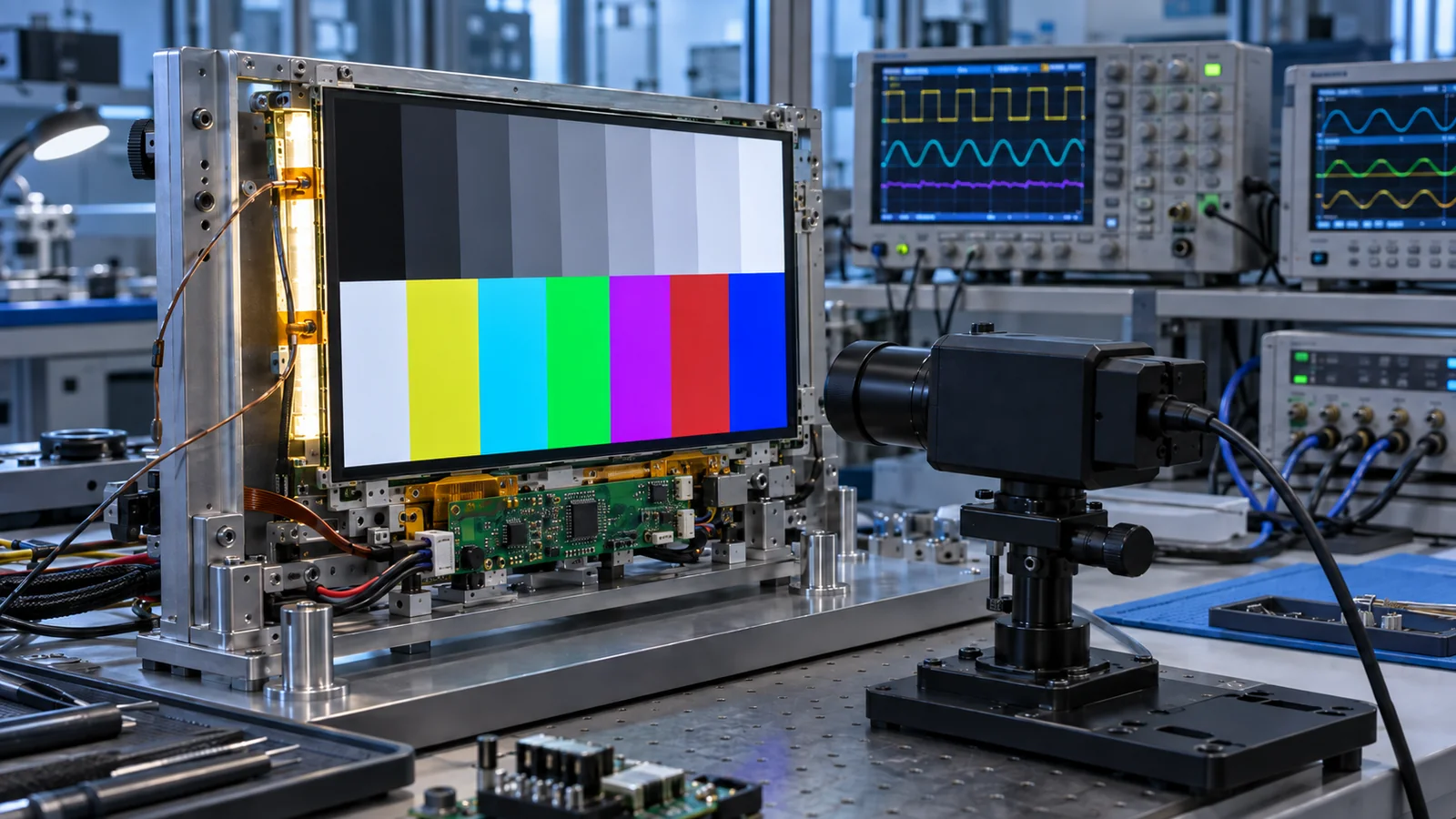
Backlight reliability
Industrial TFT LCD Backlight Lifetime
Interpret L50, L70, test conditions, duty cycle, driver behavior and validation evidence before accepting a lifetime claim.
Verify backlight lifetime →Engineering selection guides, optical design explanations, product updates and industrial TFT integration notes.
These topic paths connect the initial design question to the calculations, validation steps and relevant TFT LCD options.
Choose the interface family, then verify bandwidth, mapping, cable or FPC details and the bring-up sequence.
Compare TFT interfaces · RGB timing · LVDS cable design · MIPI DSI lanes · Troubleshooting
Treat luminance, reflection, front-stack design, heat and backlight life as one system-level decision.
Sunlight readability · Brightness classes · Optical bonding · Thermal trade-offs · Backlight lifetime
Define the requirement, compare size and input choices, then plan customization and replacement risk before approval.
Requirements checklist · Selection guide · Controller boards · FPC customization · Obsolete LCD replacement
Interpret L50, L70, test conditions, duty cycle, driver behavior and validation evidence before accepting a lifetime claim.
Verify backlight lifetime →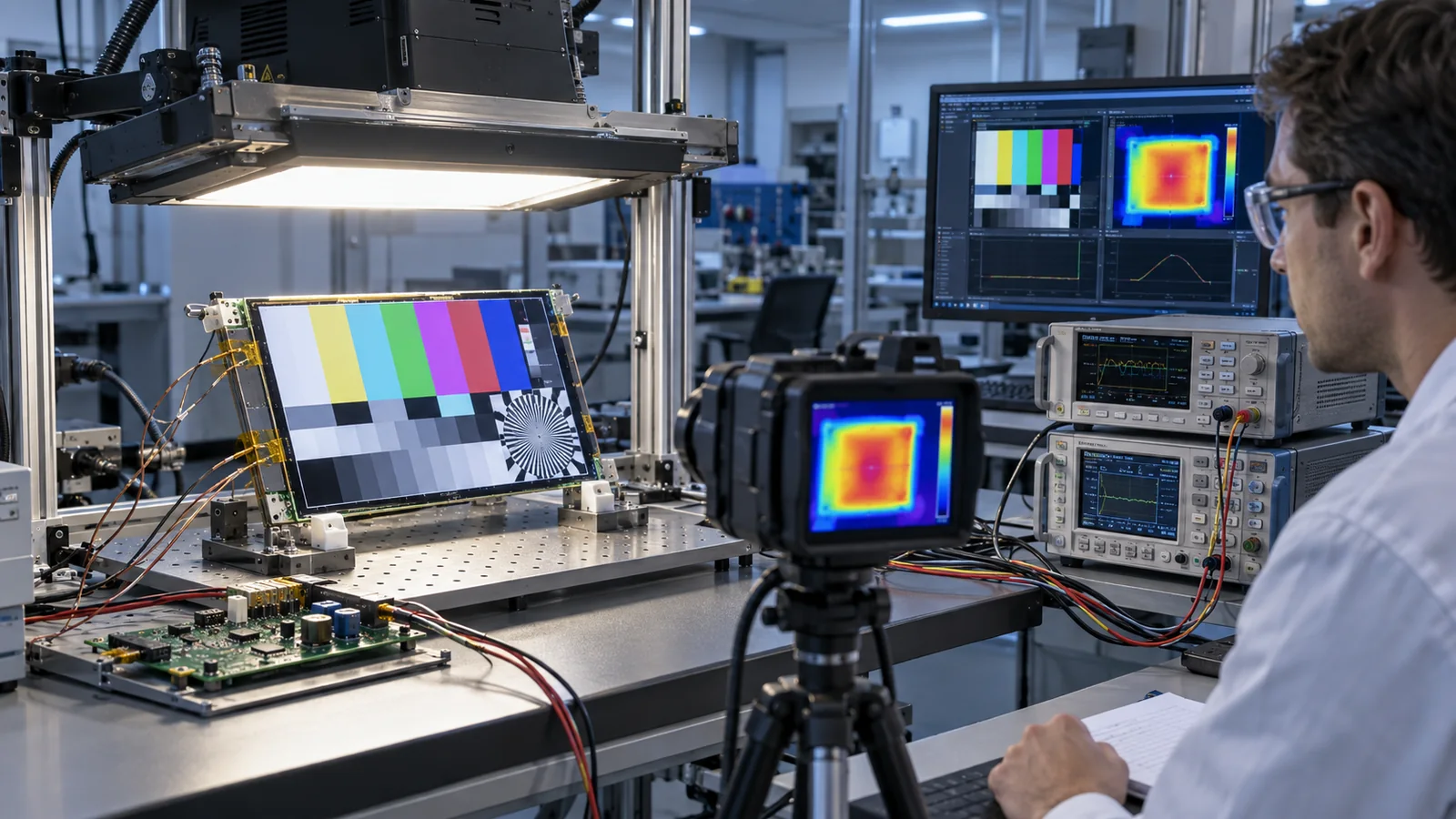
Build a system-level power and thermal plan for the backlight, driver, optical stack, enclosure and solar-load conditions.
Review thermal trade-offs →
Understand the benefits, limits, OCA/LOCA choices, stack tolerances, failure risks and validation inputs before design release.
Read the optical-bonding guide →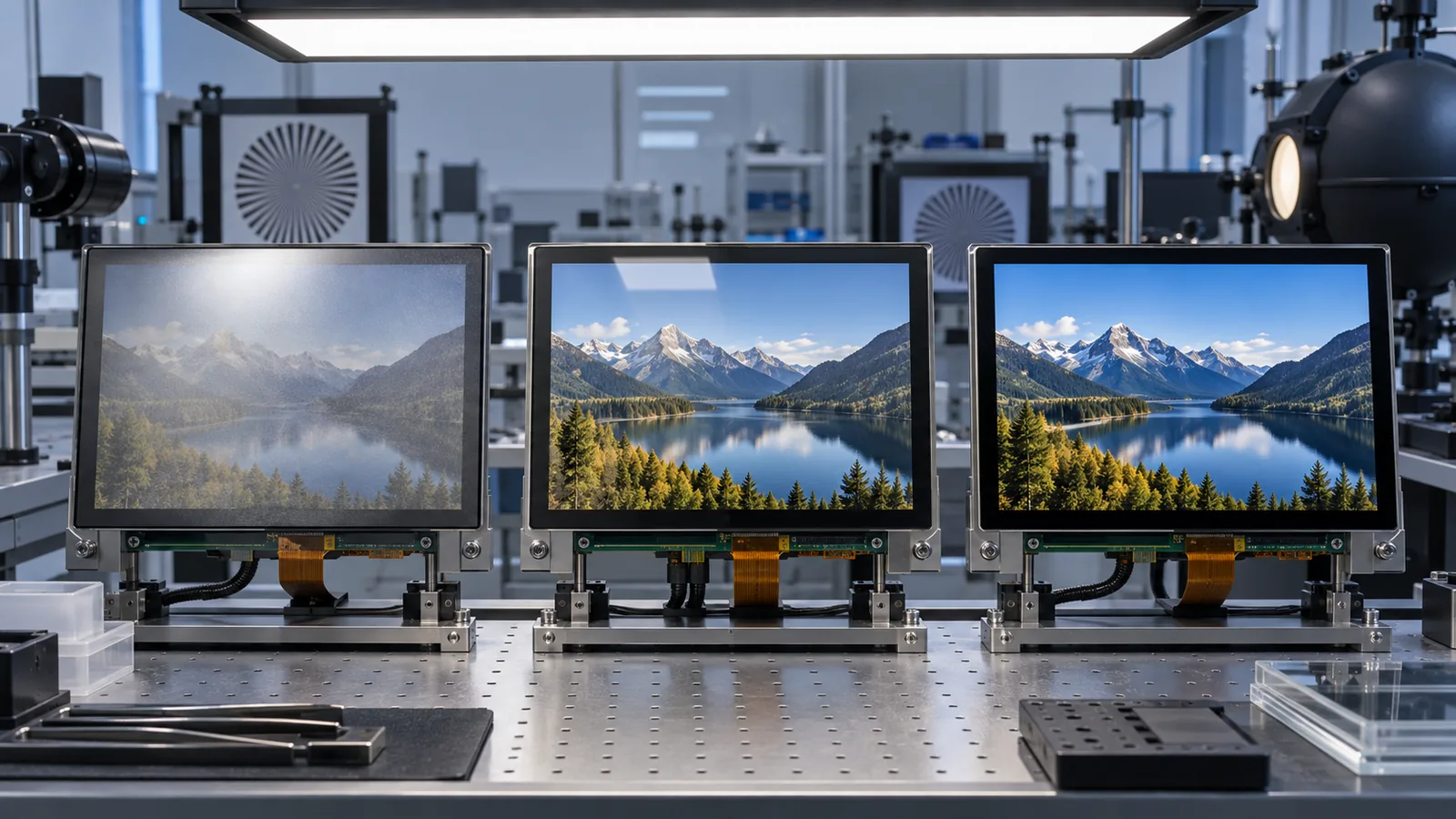
Compare how AG scatters glare, AR reduces reflected intensity and optical bonding removes an internal air gap.
Compare AG, AR and bonding →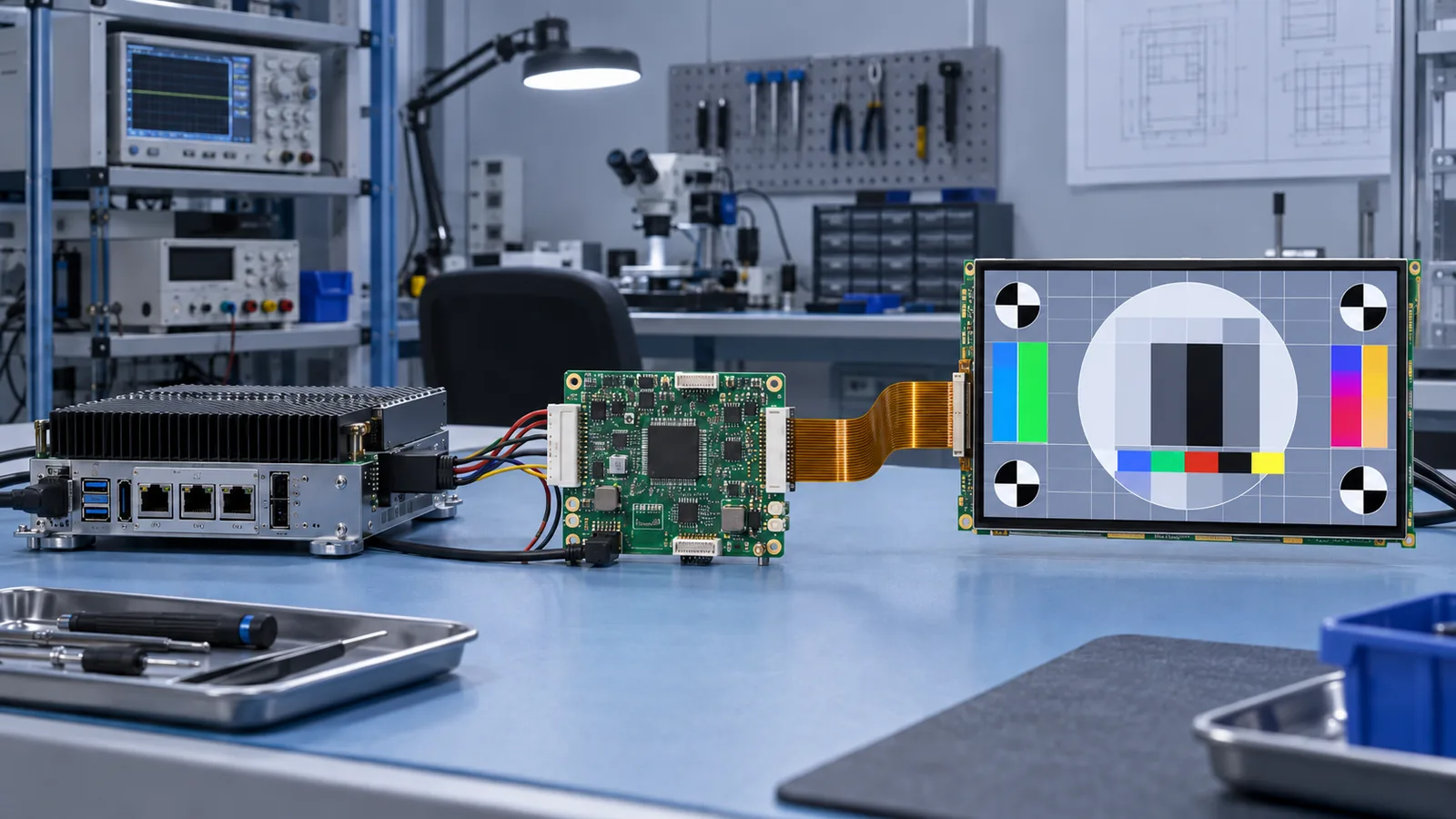
Match the host input, native panel interface, timing, power, firmware and environmental requirements before committing to hardware.
Read the controller-board guide →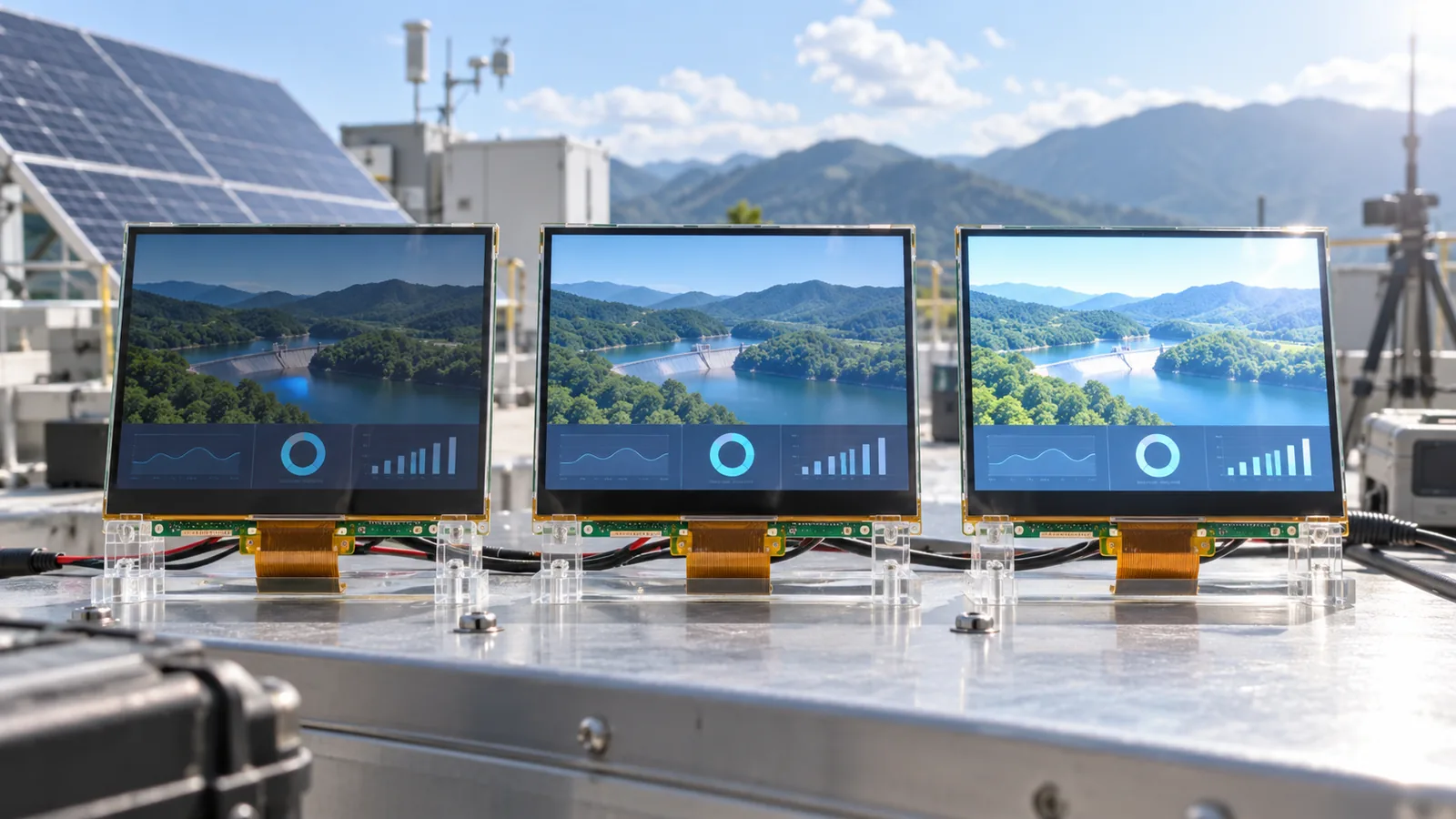
Choose a practical luminance target around ambient light, reflections, power, heat, optical bonding and system-level validation.
Compare outdoor luminance →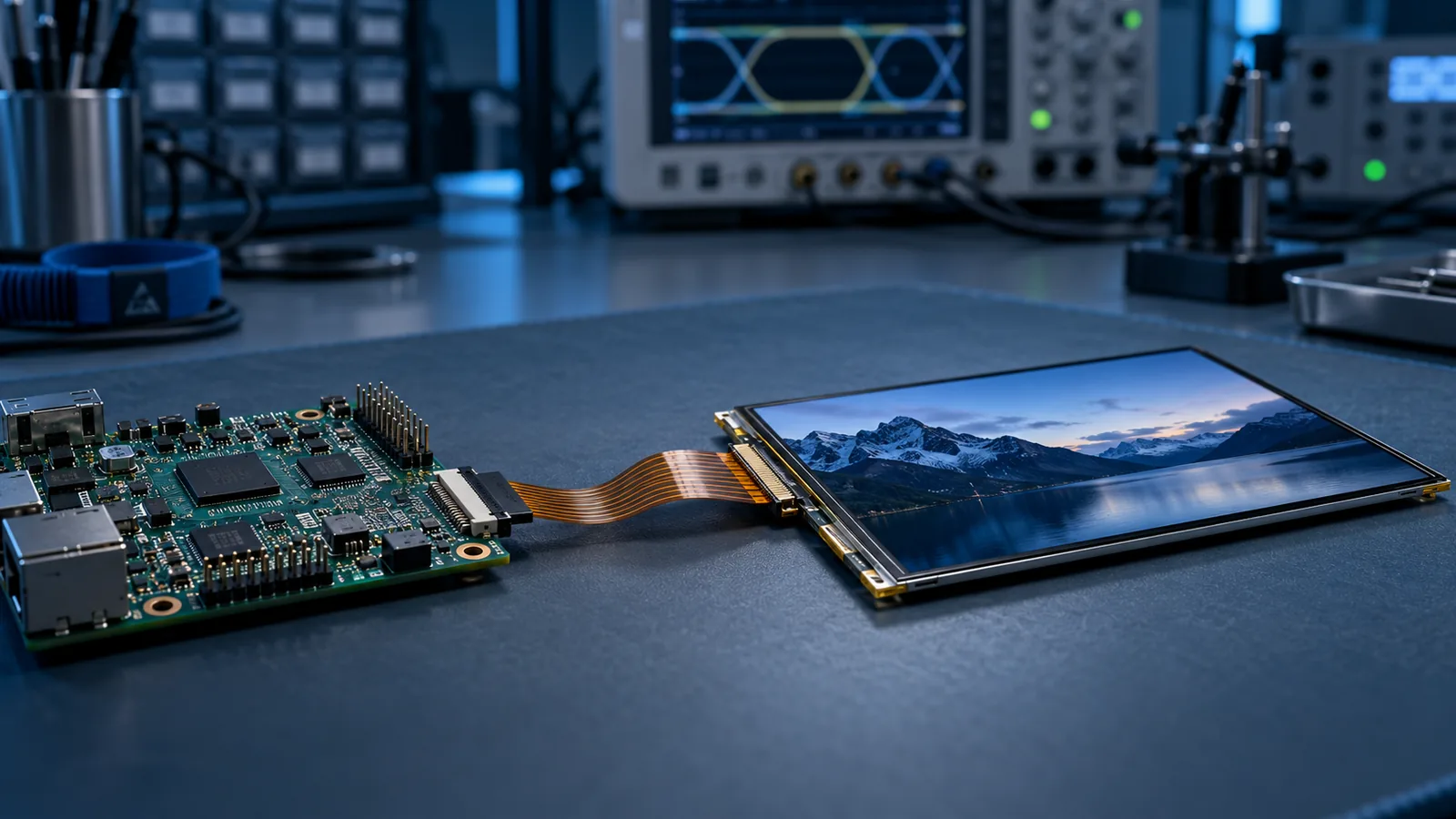
Calculate pixel payload, match host and panel capabilities, choose lane count and validate D-PHY timing and signal margin.
Read the MIPI DSI guide →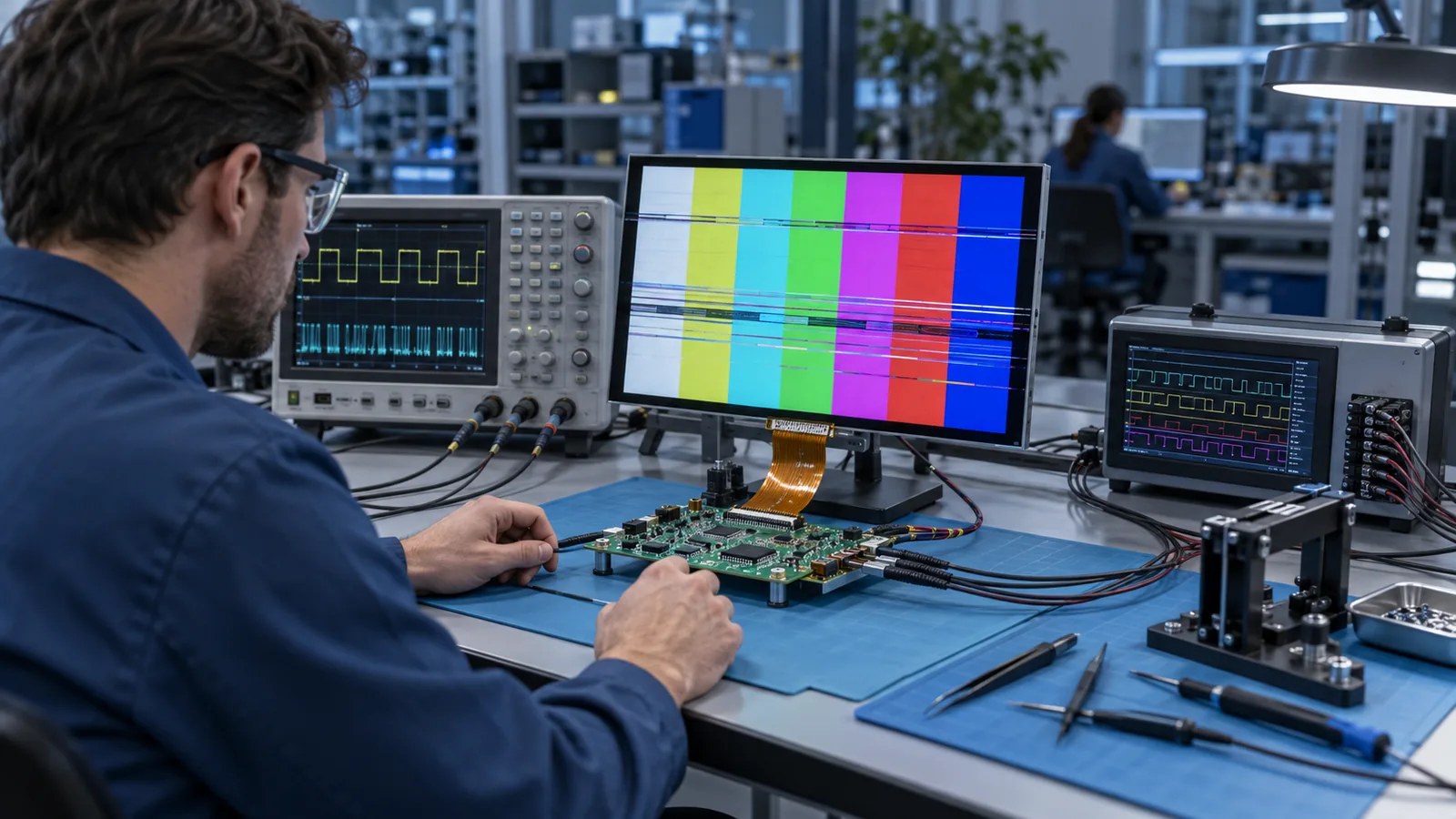
Use a symptom-led workflow to isolate power, reset, pinout, timing, mapping, protocol, signal-integrity and software faults.
Read the troubleshooting guide →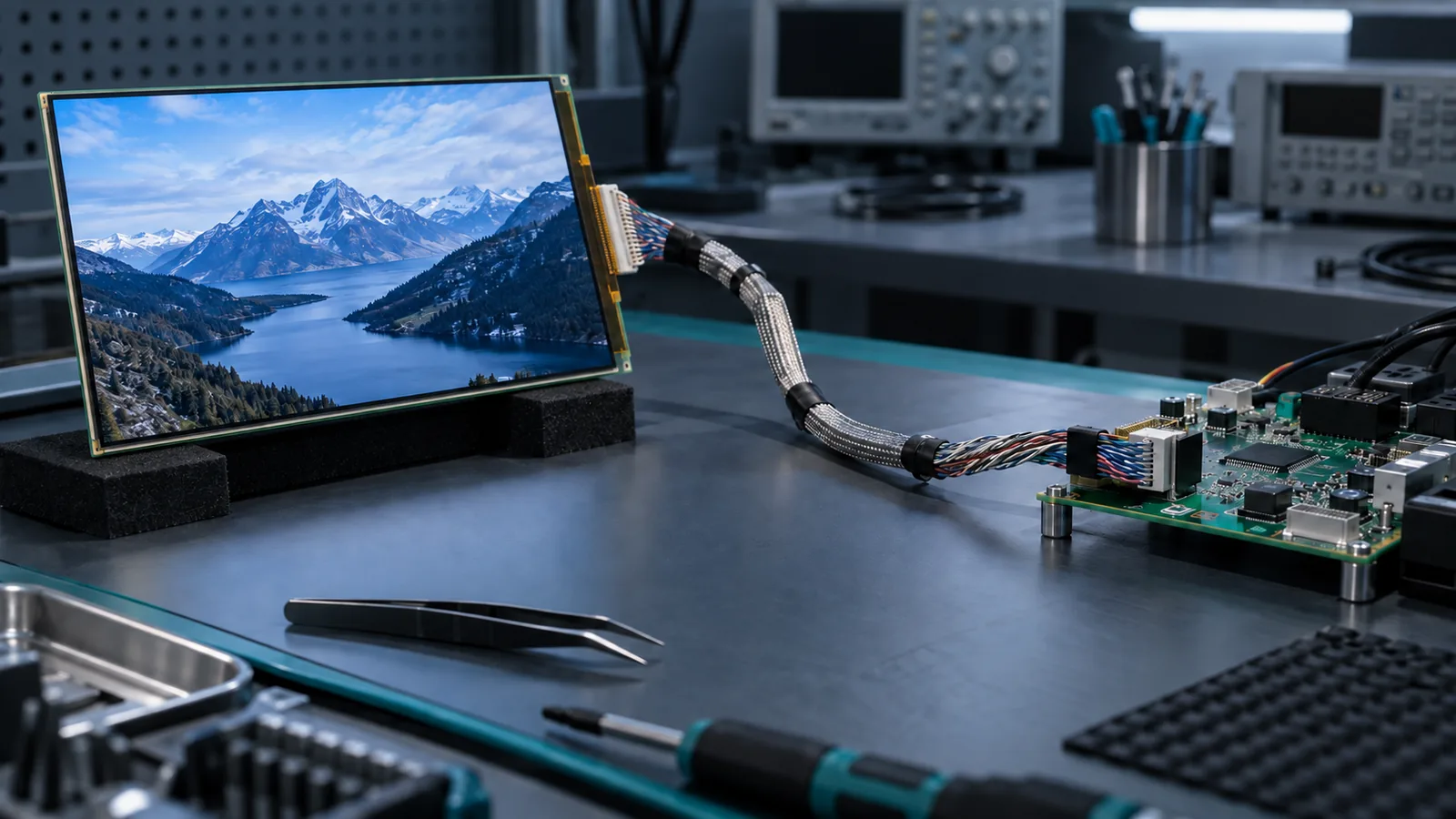
Review pixel clock, channel mapping, cable construction, connectors, shielding, routing and validation before freezing the harness.
Read the LVDS cable guide →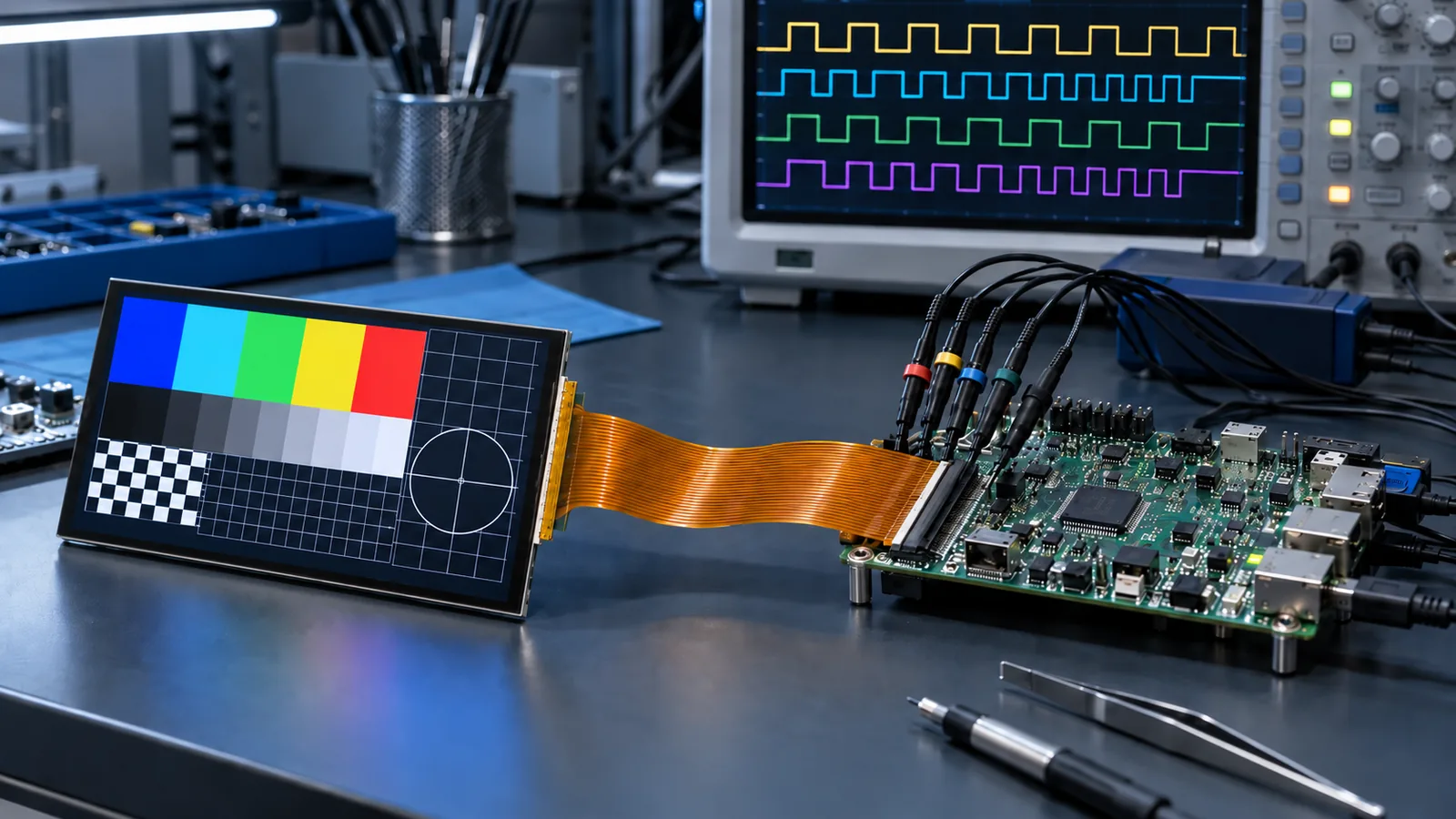
Understand PCLK, DE, HSYNC, VSYNC, porches, polarity, color mapping, bandwidth and common bring-up problems.
Read the RGB timing guide →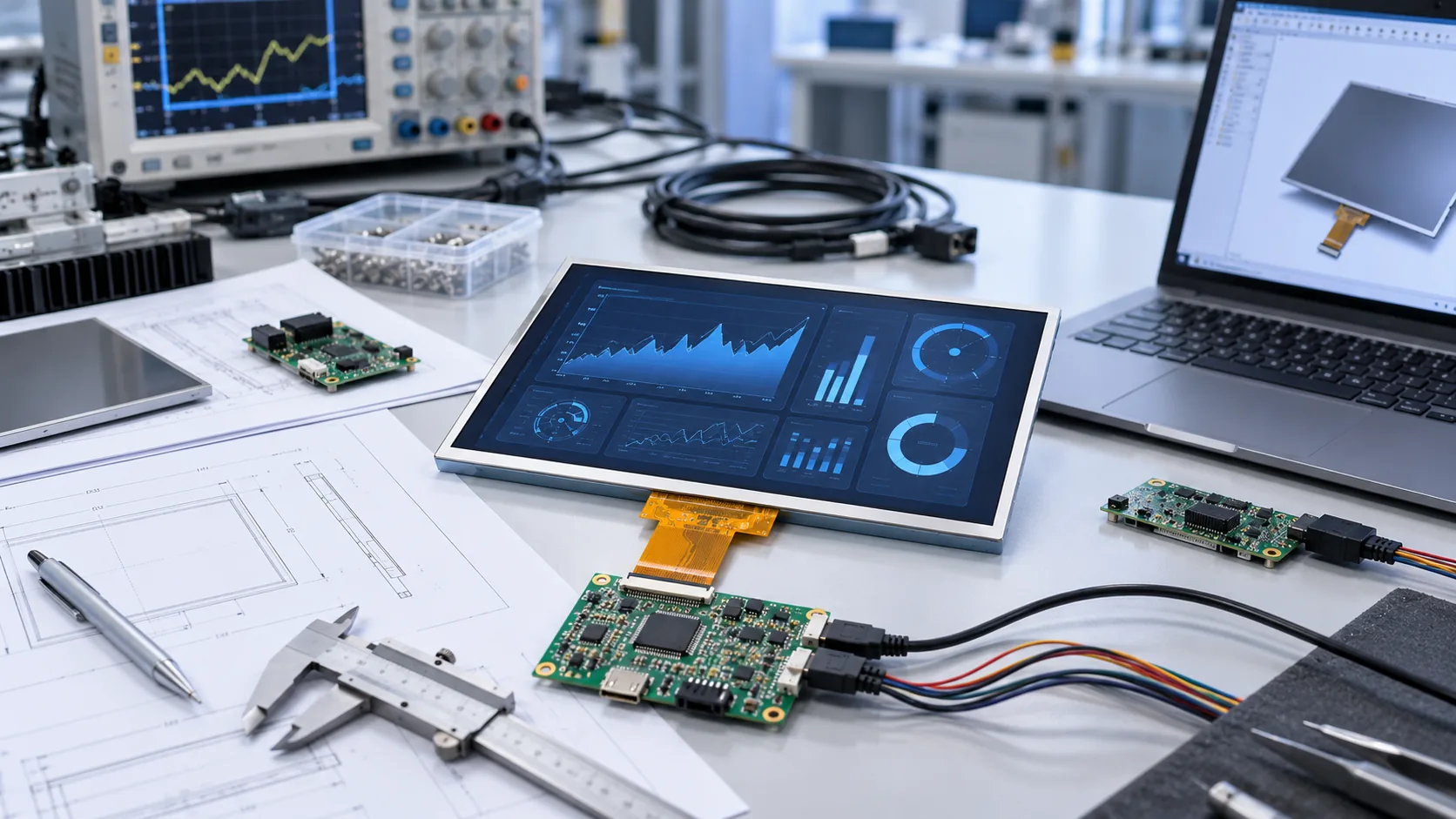
Collect application, mechanical, interface, optical, environmental and sample-validation details before requesting a recommendation.
Read the checklist →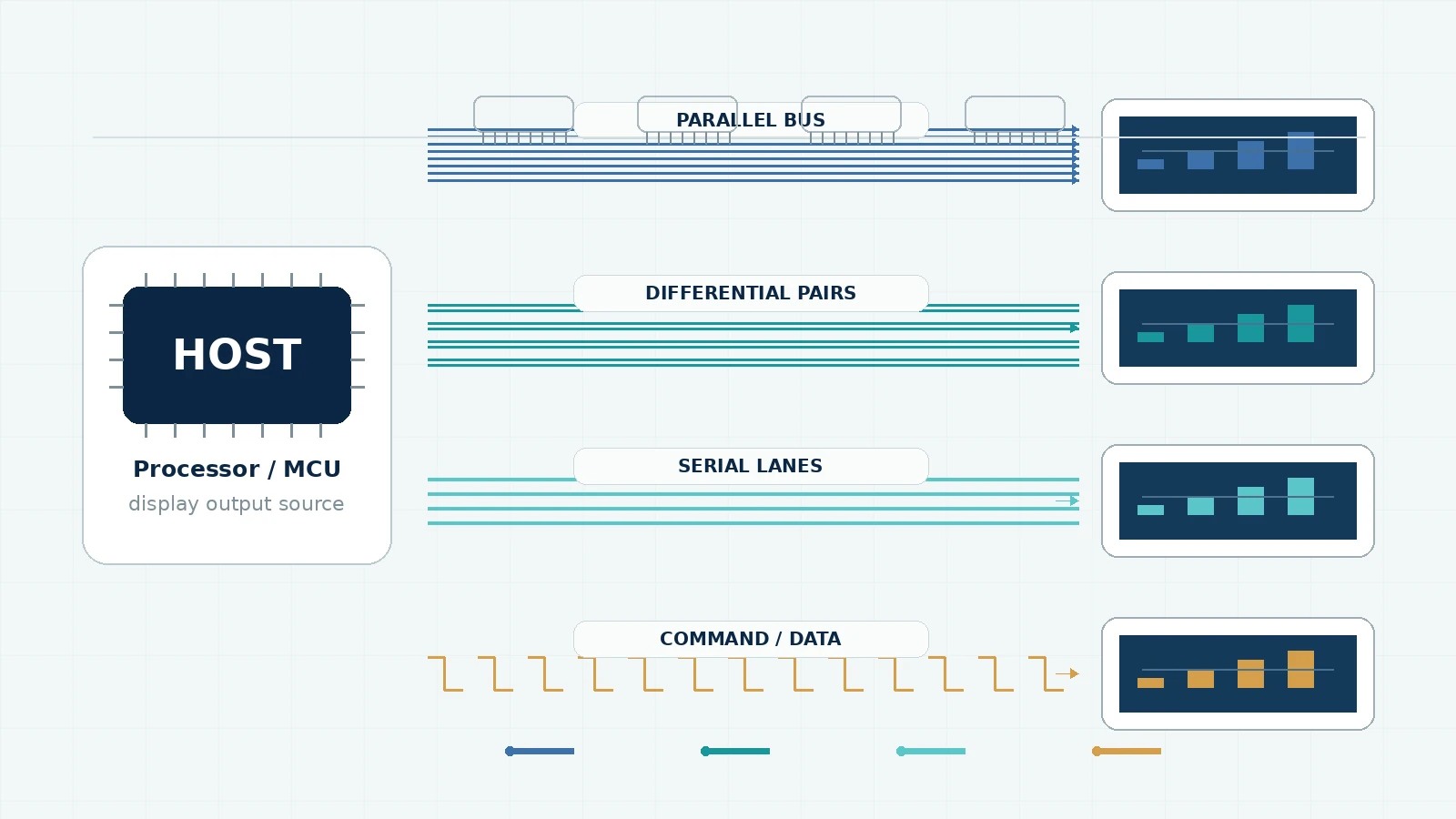
Compare host output, timing, mapping, distance, pin count and software requirements before sampling.
Read the guide →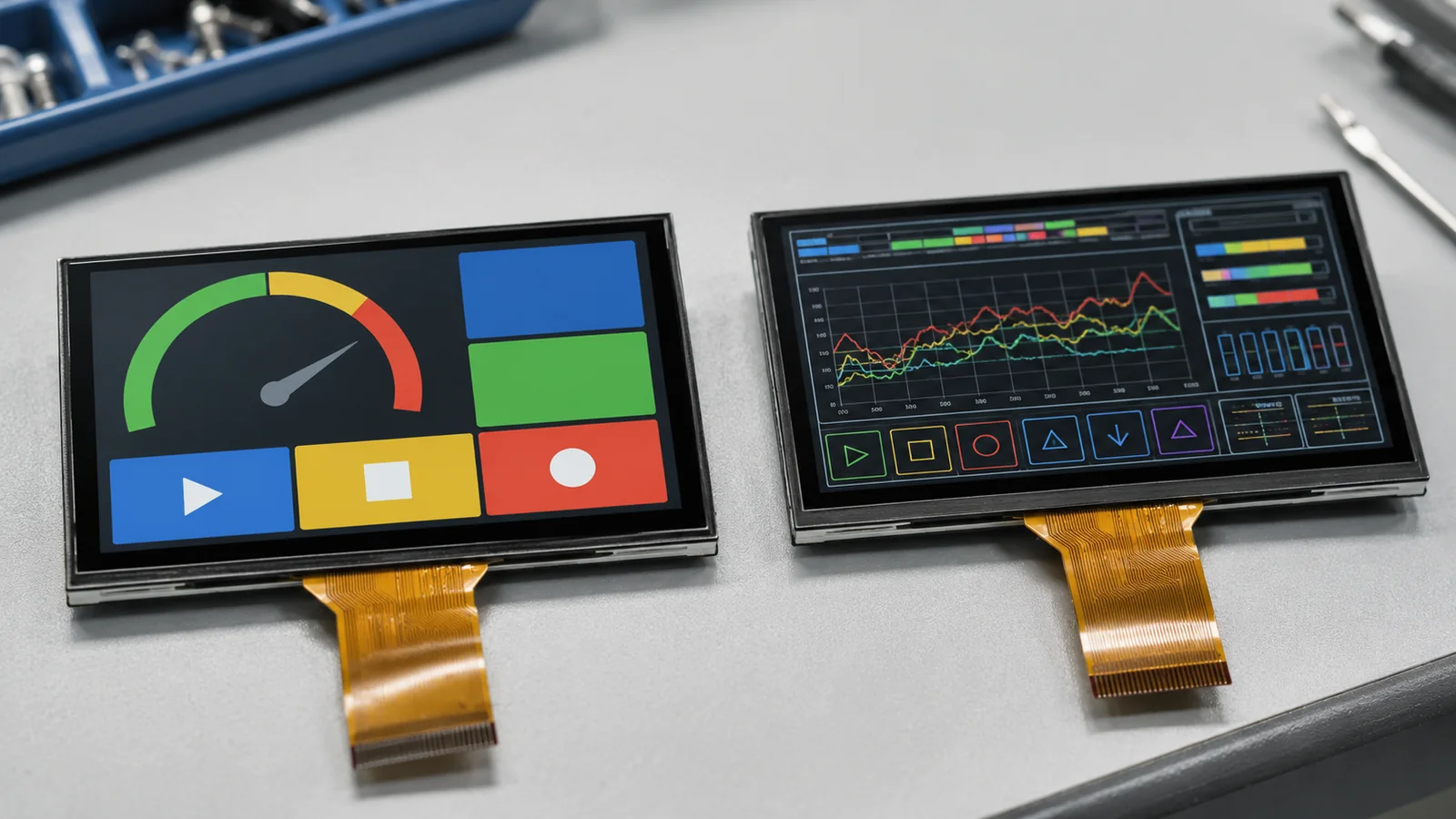
Compare pixel density, memory planning, interfaces and verified 3.5-inch module options.
Read the guide →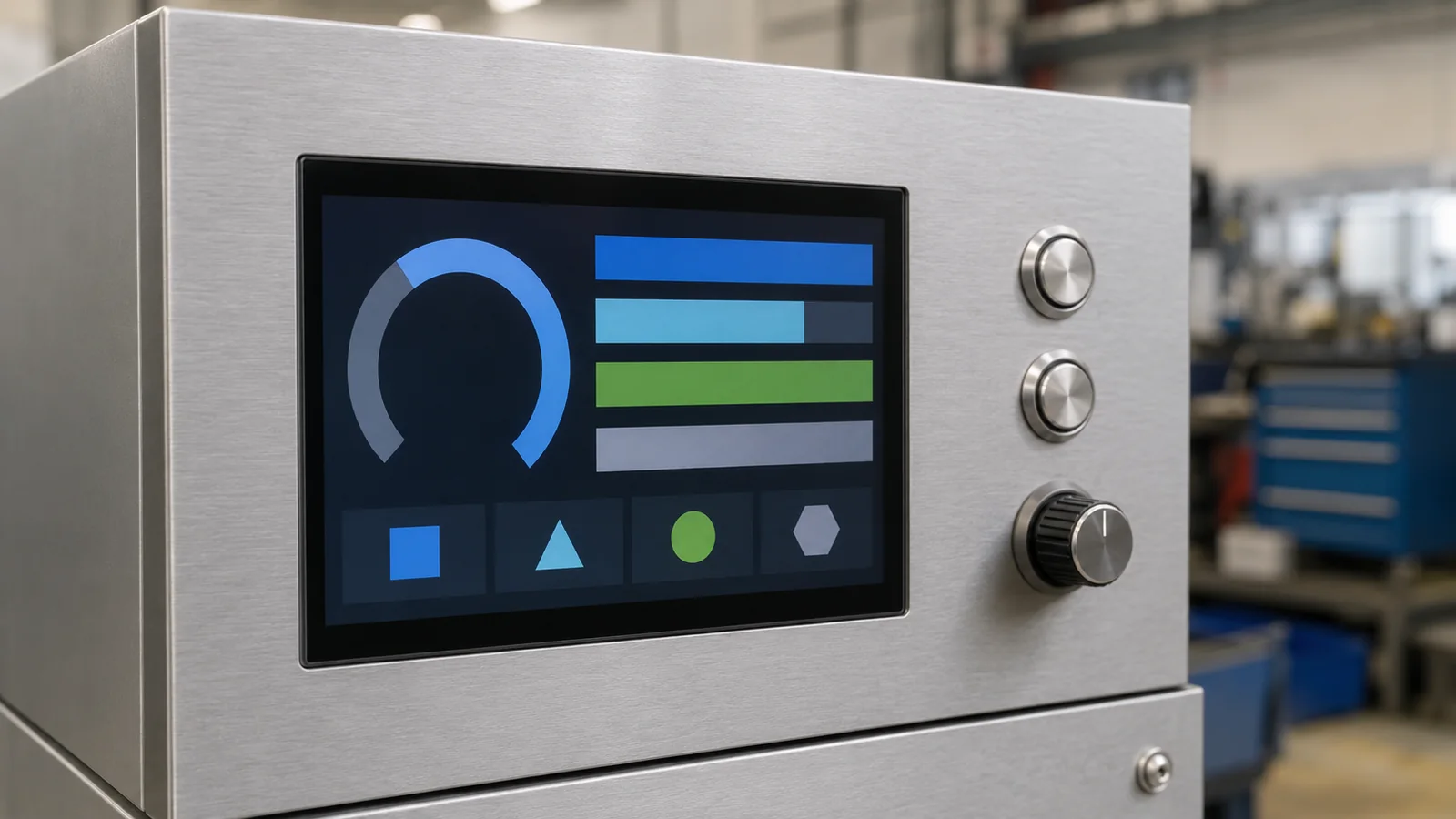
Review display geometry, memory, pixel timing and the implications for an industrial HMI.
Read the guide →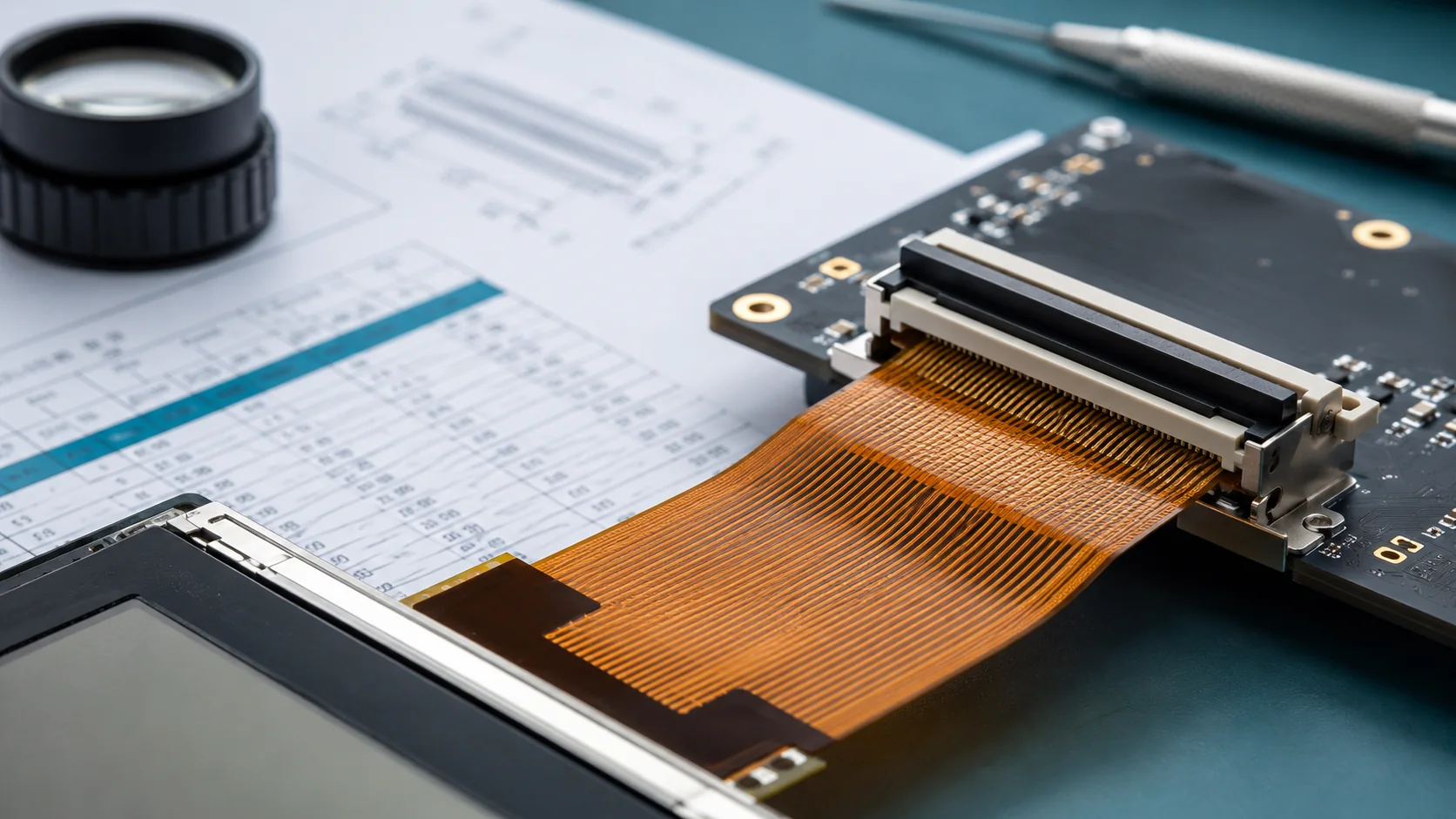
Review connector geometry, pin mapping, power, timing, EMC, controlled drawings and sample approval.
Read the guide →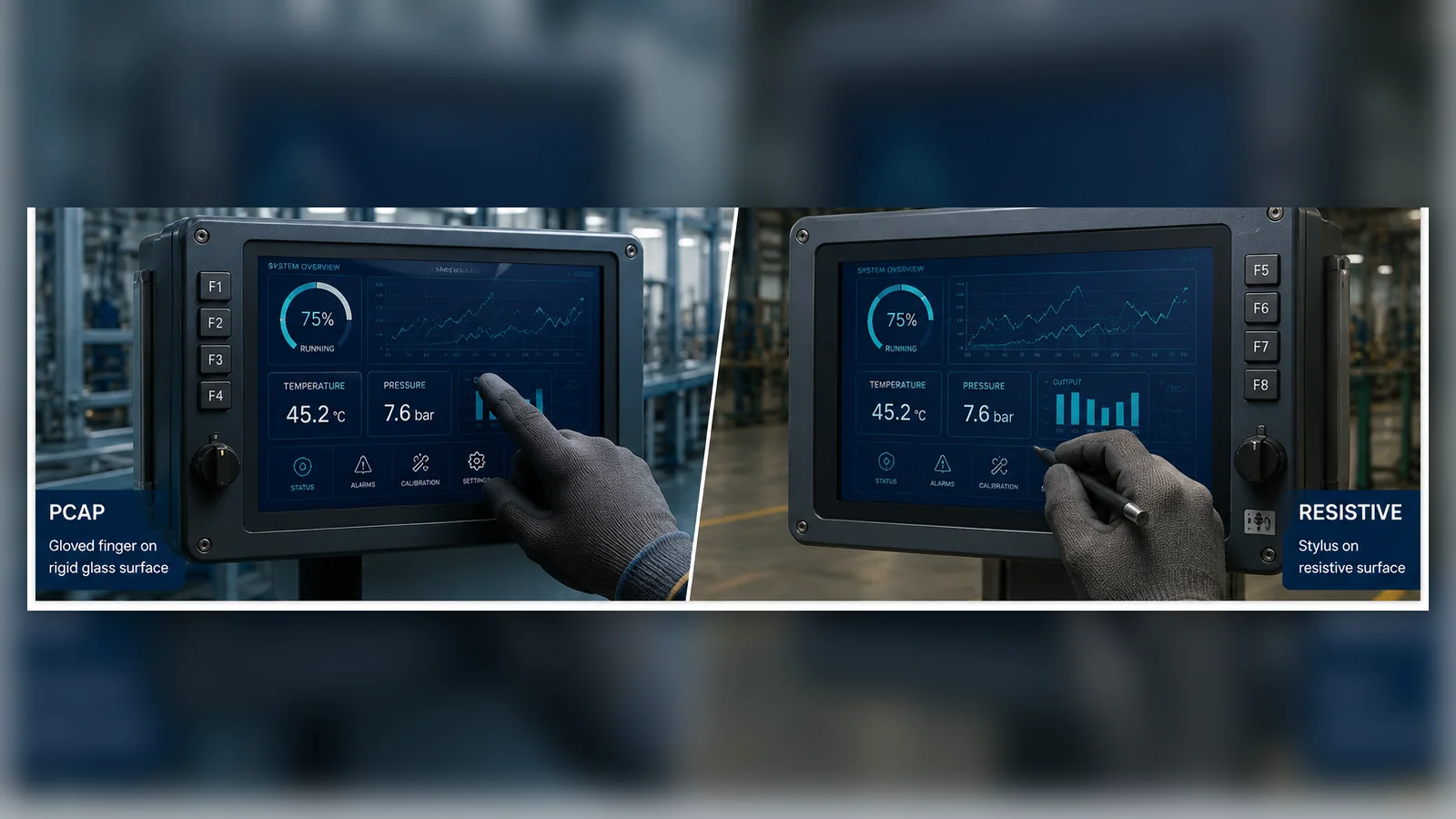
Compare gloves, water, stylus input, cover glass, optical design, EMC and controller integration.
Read the guide →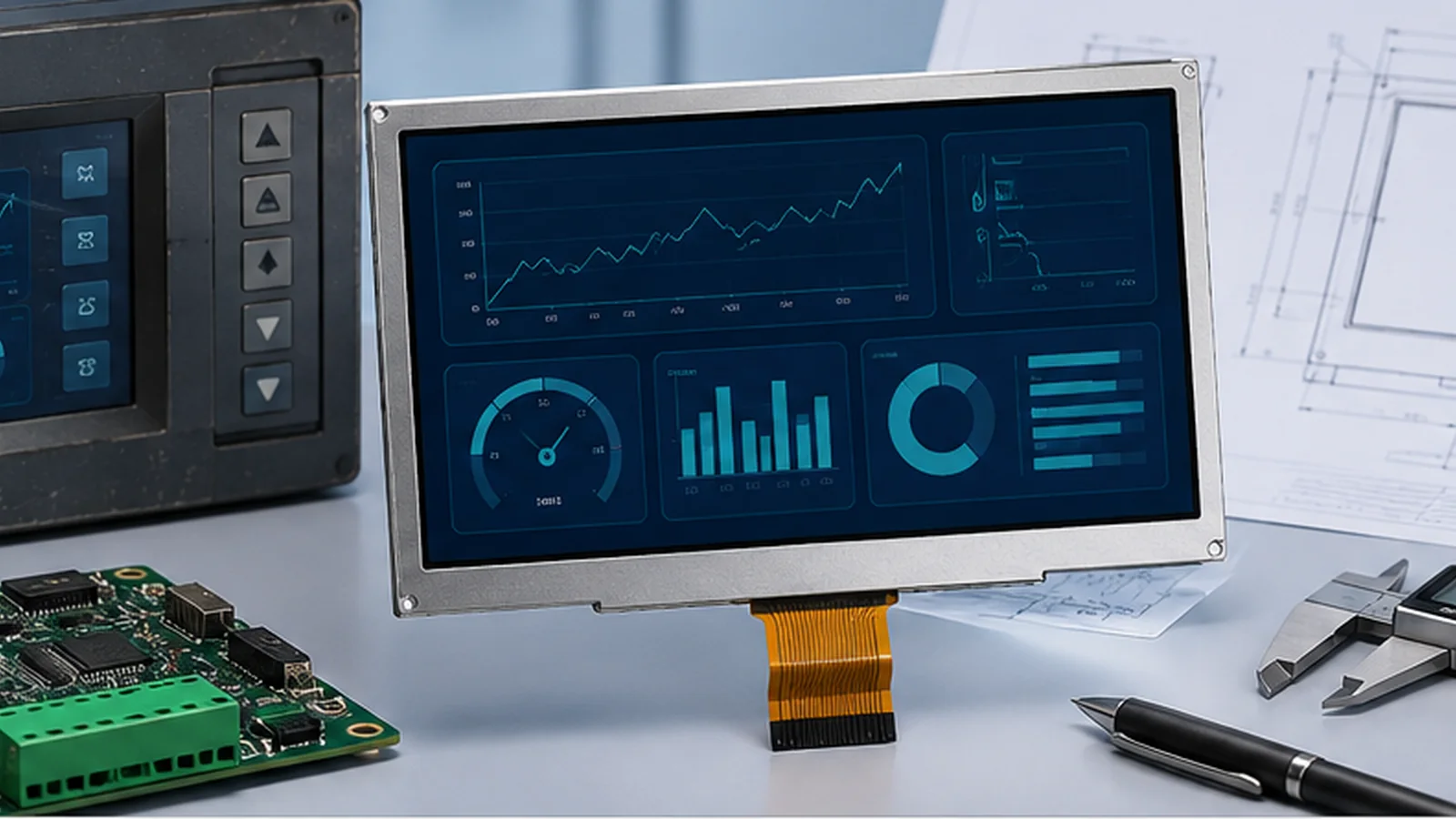
Compare mechanics, FPC, pinout, timing, power, optics and samples before approving a replacement.
Read the guide →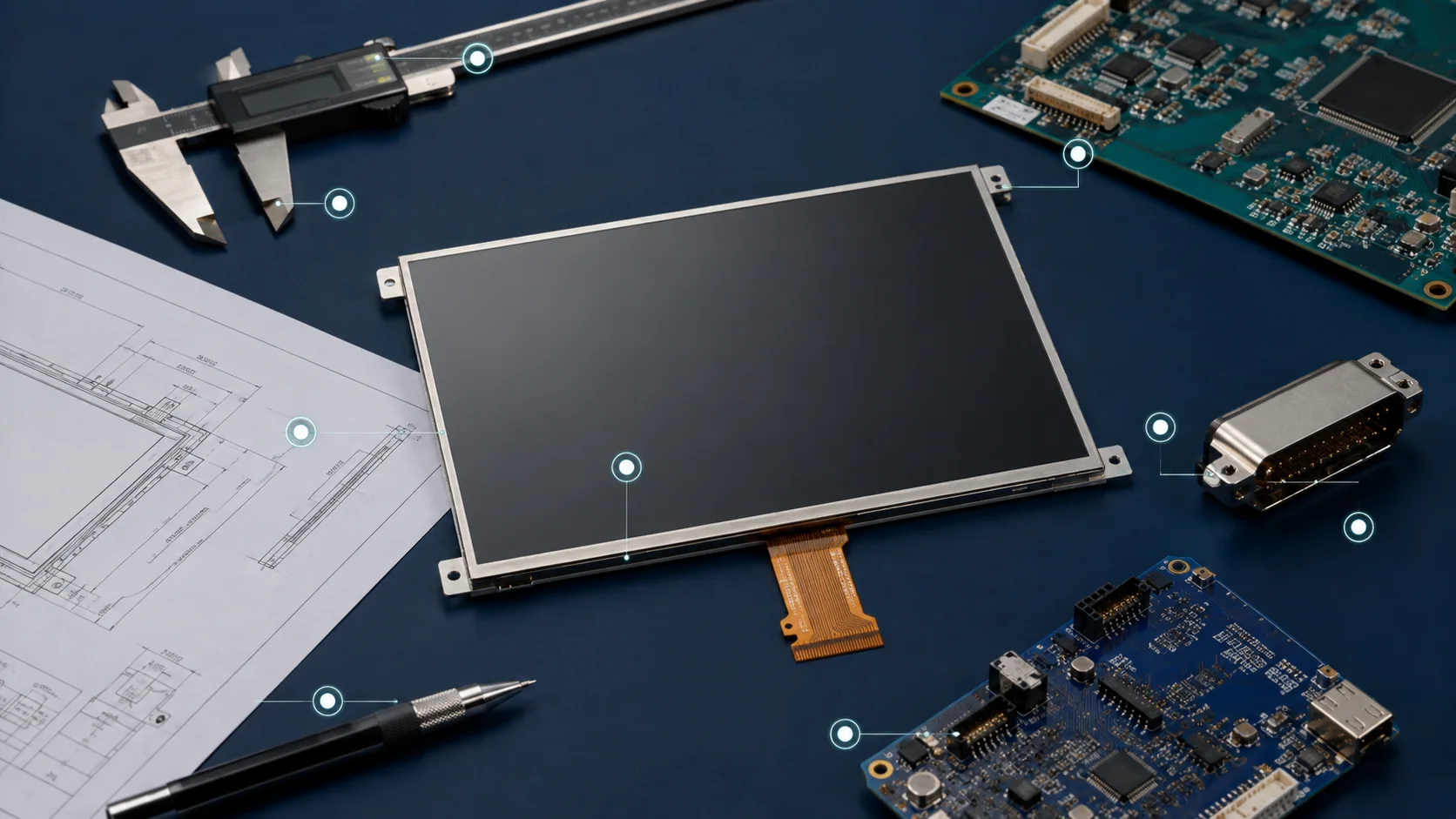
Review size, resolution, brightness, interface, touch, temperature and mechanical fit before approving a sample.
Read the guide →
Understand how brightness, reflection, optical bonding, anti-glare and anti-reflective treatments work together.
Read the guide →