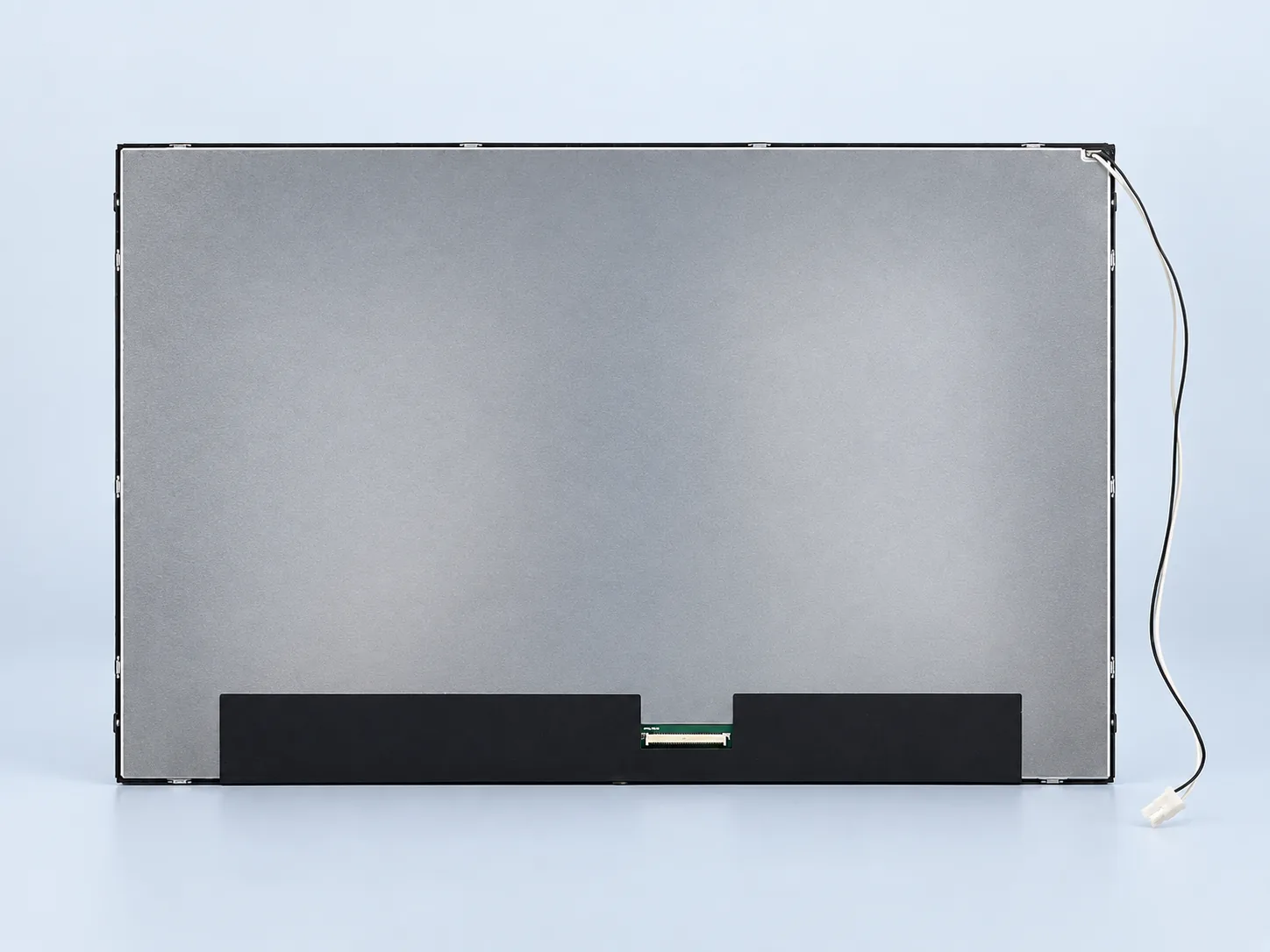
Rear structure
Reference view of the metal rear housing, connector area and side cable.
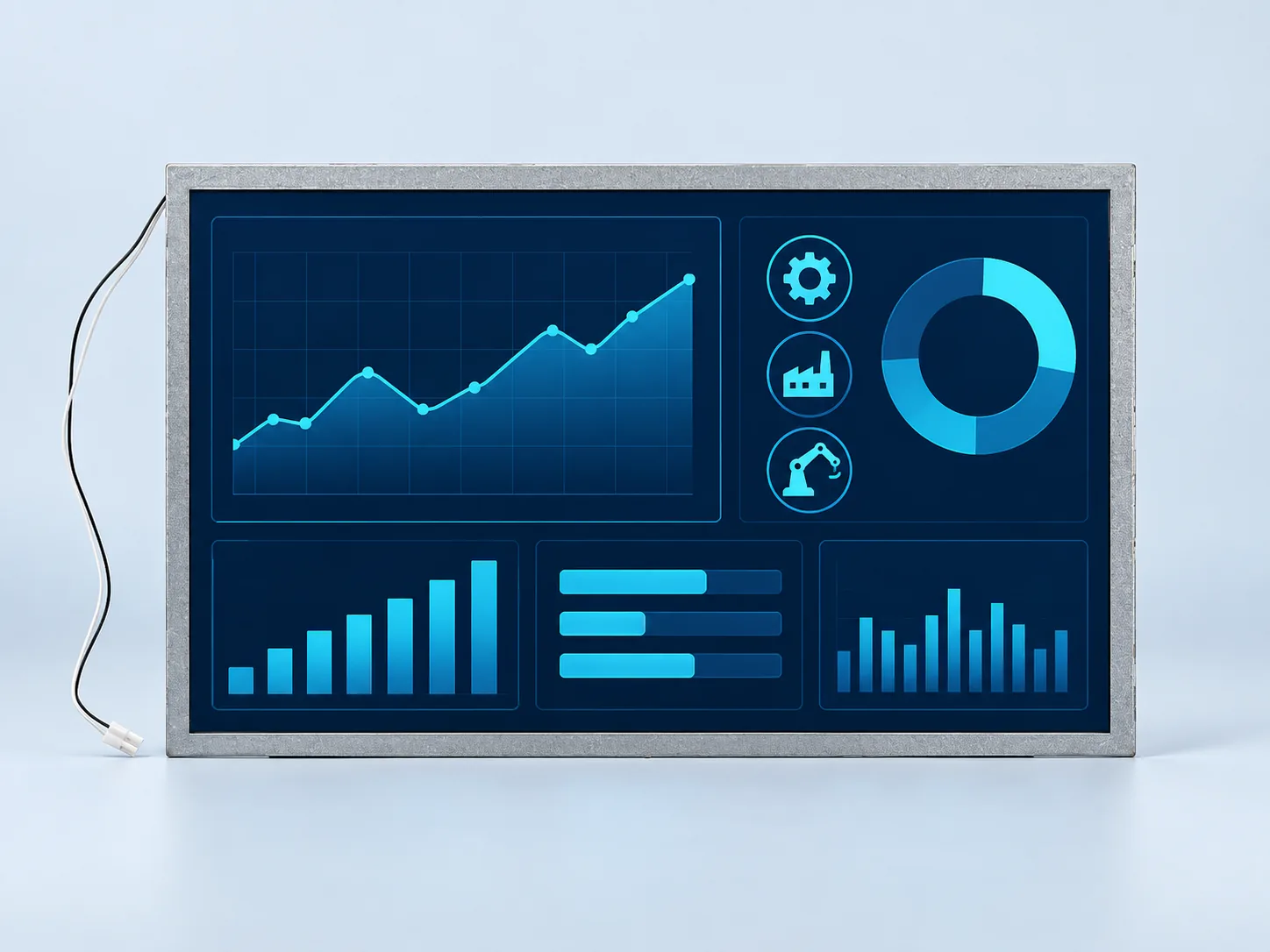
DS-T121BIHA-01 is a 12.1-inch 1280×800 IPS industrial TFT LCD with 1000 cd/m² luminance, an 8-bit 40-pin LVDS interface, no touch panel and a −20 to +70 °C operating range.
Confirm the current datasheet, pinout and approved mechanical drawing before design-in.
Evaluate the 16:10 active area, metal-frame mounting, LVDS host connection and enclosure design against the complete HMI requirement.
Review screen layout, viewing geometry, interface timing, cable route and the installed thermal path before release.
Assess the display resolution, mechanical integration and host timing against instrument readability and service requirements.
| Item | DS-T121BIHA-01 |
|---|---|
| Diagonal size | 12.1 inch |
| Resolution | 1280×800 |
| LCD type | IPS TFT |
| Viewing direction | All |
| Luminance | 1000 cd/m² |
| Module interface | 8-bit LVDS, 40-pin |
| LCD driver IC | TBD in the supplied module list; confirm the current datasheet |
| Touch panel | No TP |
| Active area (W×H) | 261.12×163.20 mm |
| Module outline (W×H×D) | 277.70×180.60×6.00 mm |
| Operating temperature | −20 to +70 °C |
| Storage temperature | −20 to +70 °C |
Reference view of the metal rear housing, connector area and side cable.

Confirm the approved drawing for mounting, cable routing and mechanical tolerances.

Illustrative integration context; use the approved drawing for dimensions and release decisions.
An illustrative protected control-panel concept, not a documented customer deployment or a controlled readability test.

Illustrative factory-control installation. Confirm mounting, sealing, optical stack, cable routing and electrical limits for the actual enclosure.

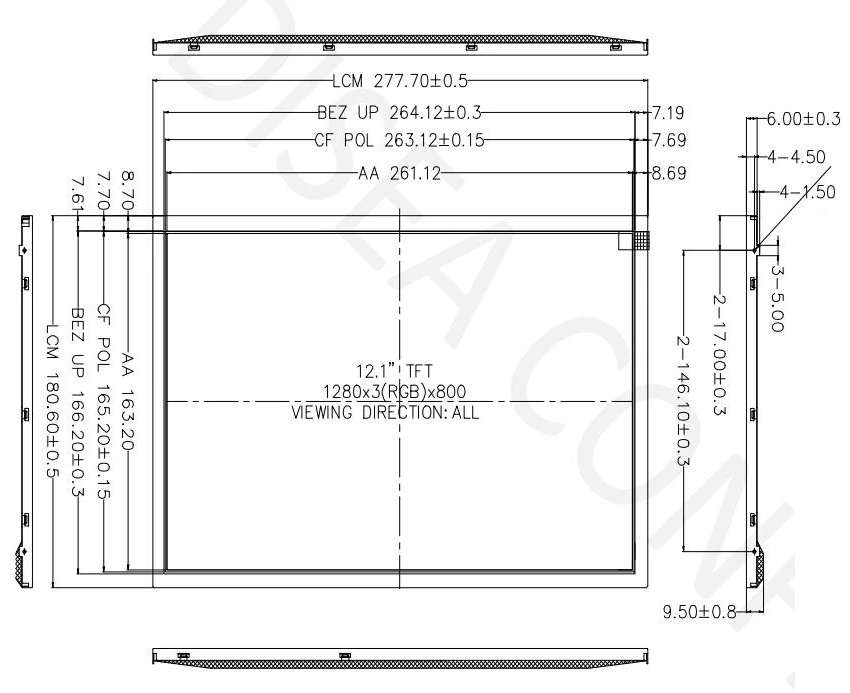
Mechanical reference drawing published with the supplied product material.
The supplied module list records a 277.70×180.60×6.00 mm module outline and 261.12×163.20 mm active area. Confirm the current approved drawing revision, connector details, pinout, tolerances and keep-out zones before design lock.
Request the current datasheet and approved drawing before locking enclosure, host-board and optical-stack details.
Use luminance as one input alongside reflection, cover stack, power and thermal conditions.
View high-brightness options →Compare bit depth, pinout, mapping, timing and cable requirements before connecting the host.
Review TFT interfaces →Validate backlight power, optical stack and enclosure thermal behavior together.
Read the thermal guide →Send the host platform, enclosure constraints, target quantity and viewing environment for a fit review.