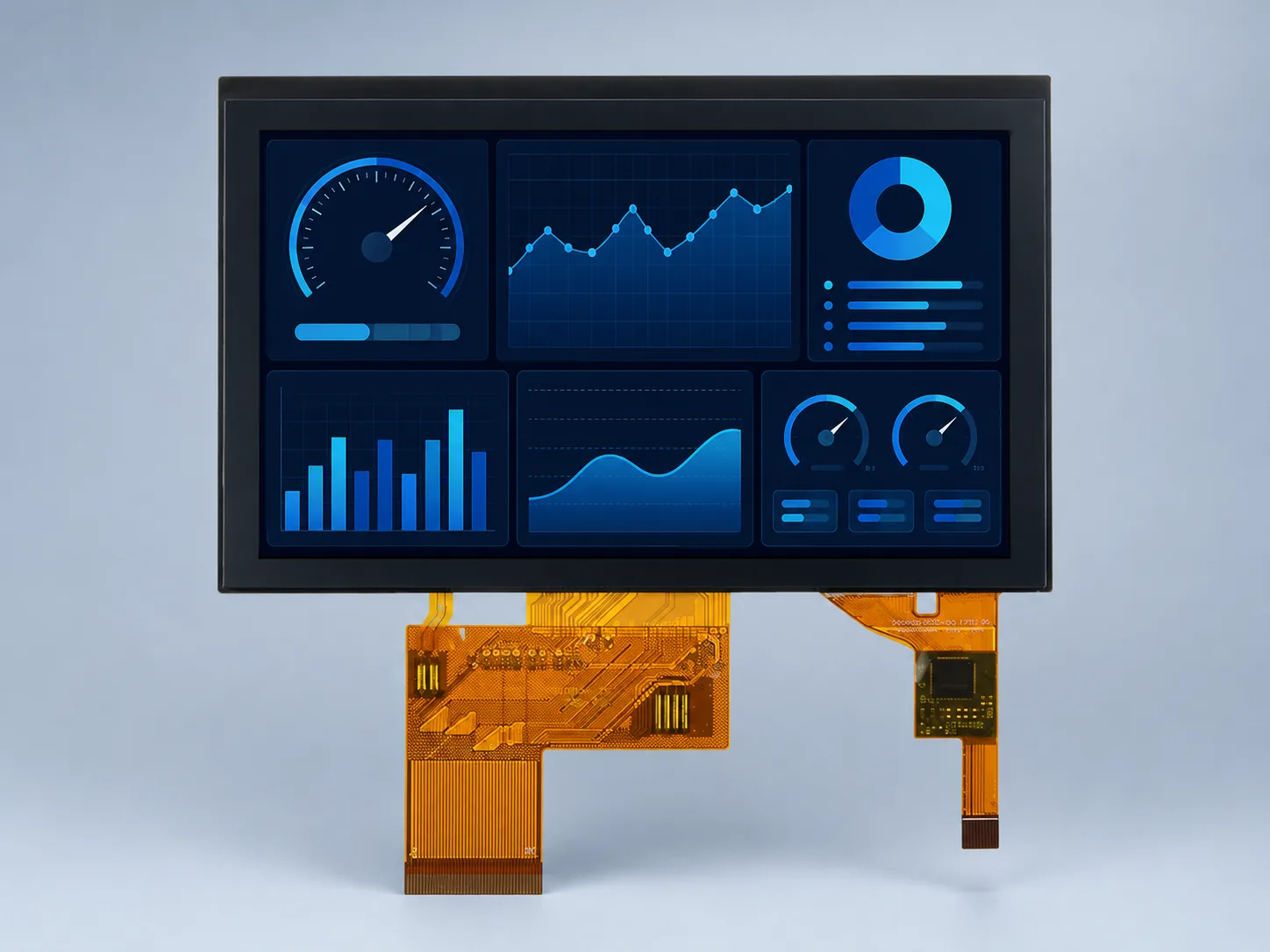
5.0 inchIPS
DS-T050BWSA-02CP
800×480 · 900 cd/m²
RGB 24-bit, 40-pin
CTP / PCAP · Optical bonding
Automation equipment often prioritizes reliable operation, clear UI, control integration and environmental margin over consumer-style specifications.
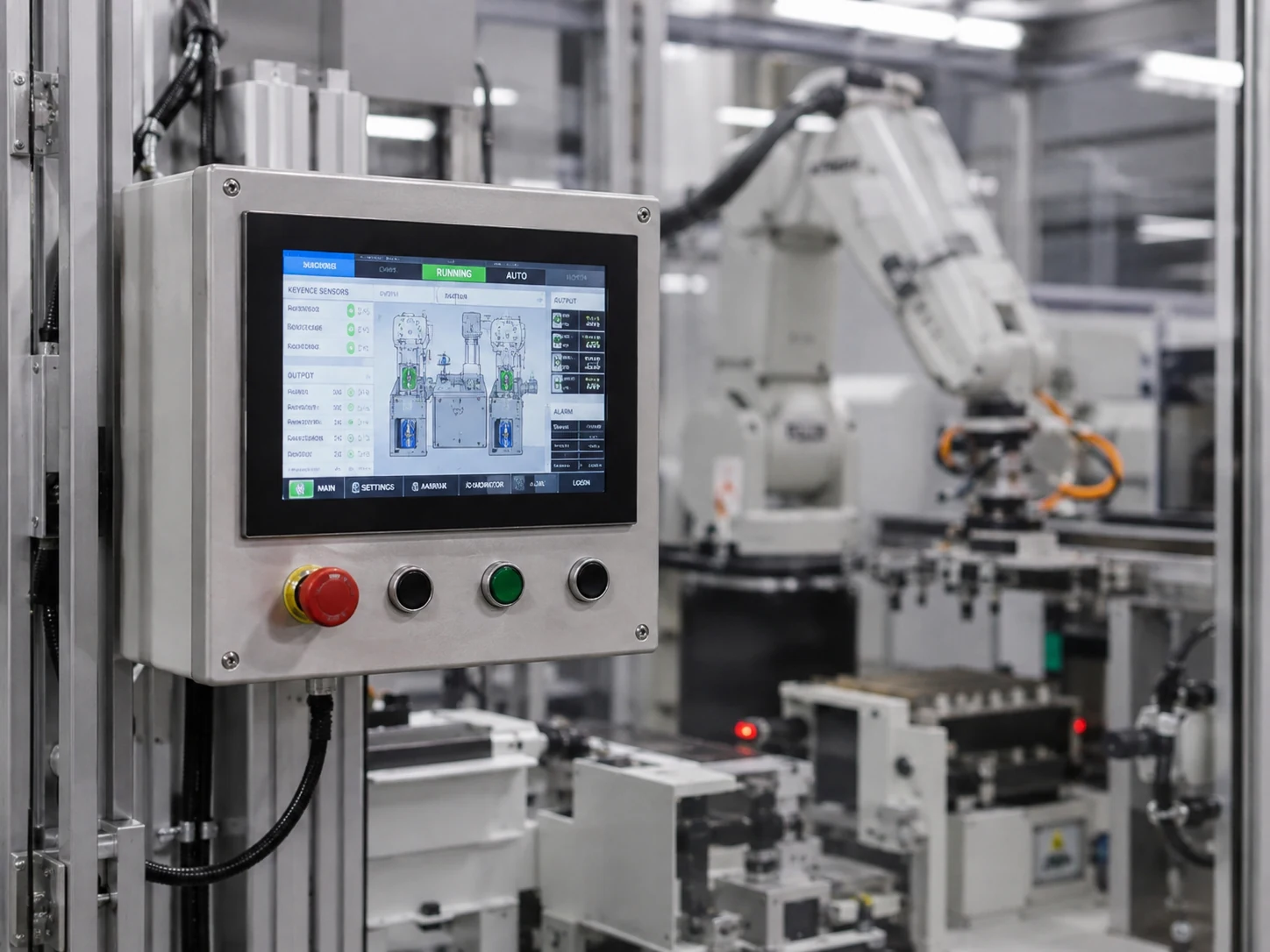
Review host interface, cable routing, operator viewing position, protective gloves, cleaning exposure and production duty. Module specifications do not prove machine-safety, washdown or EMC compliance. Agree the complete assembly validation criteria before production release.
| Model | Size / resolution | Panel / luminance | Display interface | Touch / bonding | Operating range | Why review it |
|---|---|---|---|---|---|---|
| DS-T050BWSA-02CP | 5.0 inch 800×480 | IPS 900 cd/m² | RGB 24-bit, 40-pin | CTP / PCAP Optical bonding | −20 to 70 °C | Compact RGB PCAP assembly for a smaller operator UI |
| DS-T070SWHWA-01 | 7.0 inch 800×480 | IPS 1000 cd/m² | LVDS 6/8-bit, 20-pin | No TP | −30 to 85 °C | 7-inch wide-temperature LVDS no-touch candidate for separate front-panel integration |
| DS-T101HIEWA-01CP | 10.1 inch 1280×800 | IPS 850 cd/m² | LVDS 6/8-bit, 40-pin | CTP / PCAP Optical bonding | −30 to 85 °C | 10.1-inch LVDS bonded PCAP candidate for a larger operator interface |
Luminance belongs to the exact listed configuration. It is not a finished-system sunlight-readability, sealing, EMC or safety certification. “No TP” means no integrated touch panel is documented.
RGB 24-bit, 40-pin
CTP / PCAP · Optical bonding
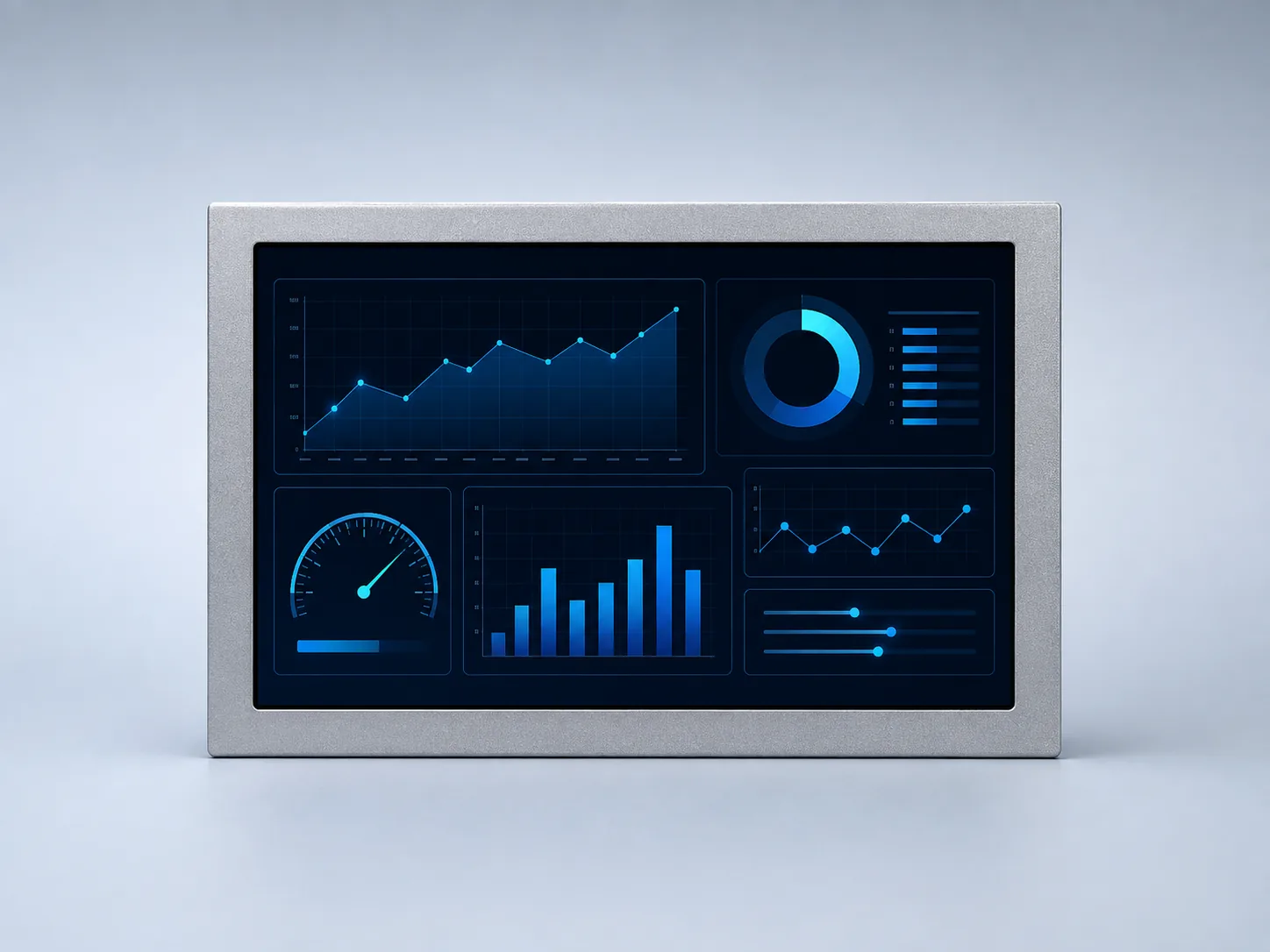
LVDS 6/8-bit, 20-pin
No TP
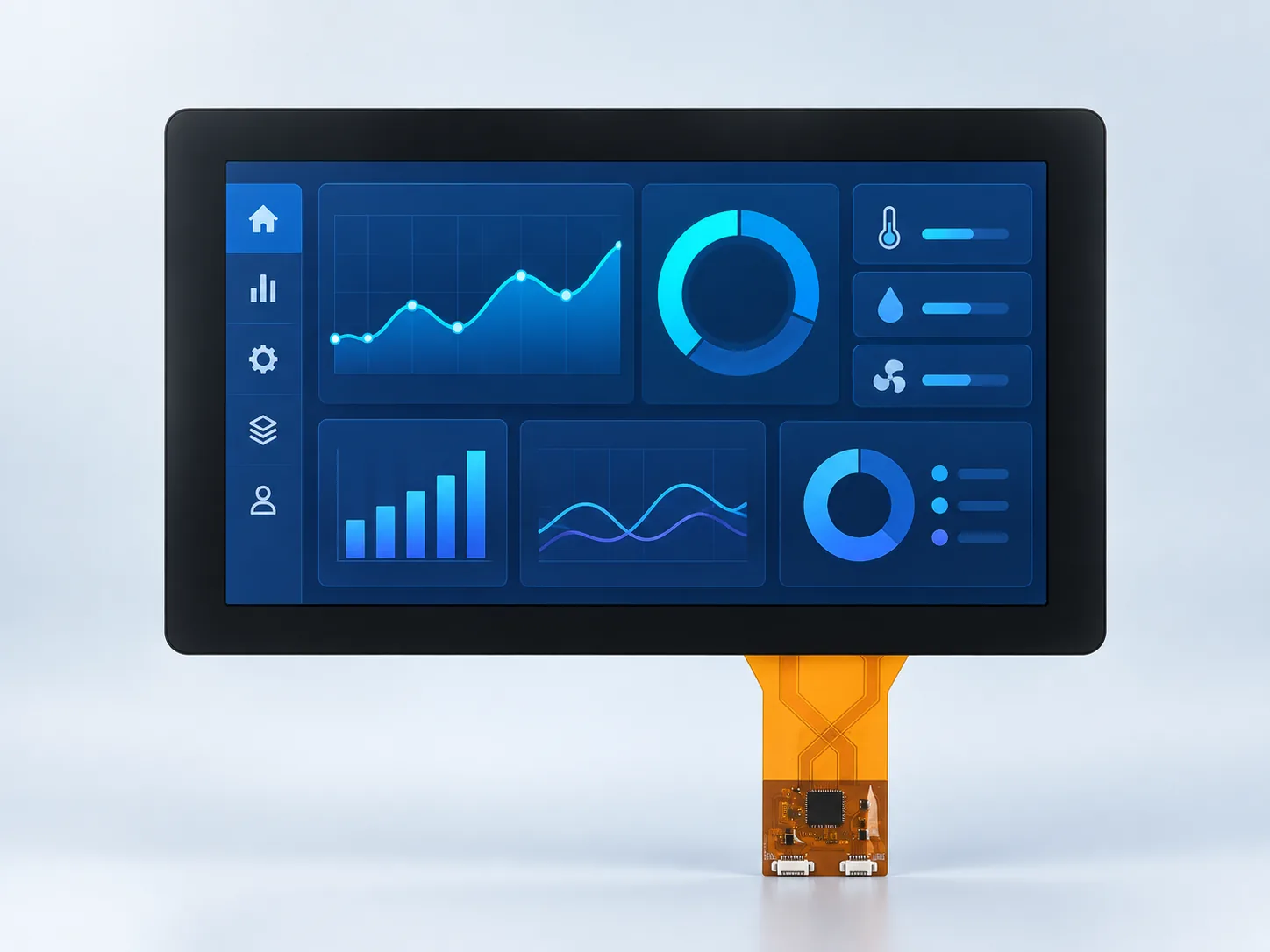
LVDS 6/8-bit, 40-pin
CTP / PCAP · Optical bonding
Connect UI, touch and controller choices.
Explore this selection path →Prepare the equipment environment and host-integration brief.
Explore this selection path →Choose the actual resolution, pin count and temperature range.
Explore this selection path →Define the operating duty, cabinet temperature, vibration and electrical environment before choosing the panel. Then verify the controller link, service access, connector retention, backlight life definition and change-control plan for the complete machine.
Separate operating, storage and start-up conditions, then validate the full assembly at the expected extremes.
Review wide-temperature selection →Check L50 or L70 criteria, drive conditions, temperature, duty cycle and the evidence behind the claim.
Verify backlight lifetime →Use a symptom-led workflow for power, reset, pinout, timing, mapping and signal-integrity faults.
Open the troubleshooting guide →Brightness, backlight, FPC, interface, touch, cover glass, optical bonding and driver-board options should be considered only where the project requires them.
The factory-automation TFT LCD guide walks through operator tasks, video and touch interfaces, cabinet conditions and system validation.