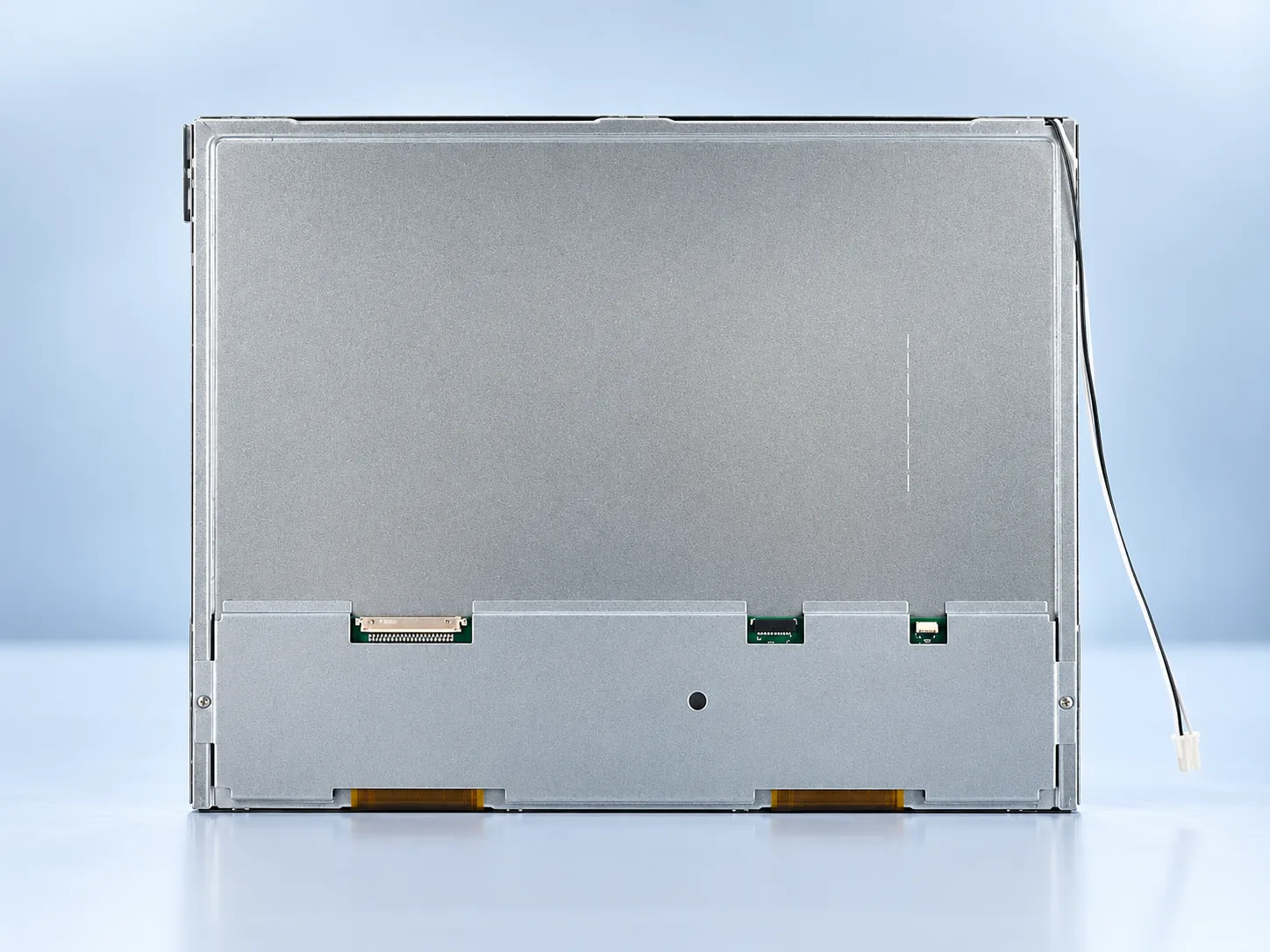
Rear structure
Reference view of the metal rear housing, connector area and cable routing.

DS-T121QXHA-01 is a 12.1-inch 1024×768 IPS industrial TFT LCD with 1000 cd/m² luminance, a 20-pin 6/8-bit LVDS interface, no touch panel and a −20 to +70 °C operating range.
Confirm the current datasheet, pinout and approved mechanical drawing before design-in.
DS-T121QXHA-01 offers a larger 12.1-inch 1024×768 IPS no-touch panel at 1000 cd/m² with a 6/8-bit LVDS, 20-pin interface. Review it for a 4:3 operator panel together with its −20 to +70 °C operating range, and resolve the active-area discrepancy noted in the published specification table against the current approved drawing before fixing the bezel aperture.
Evaluate the 4:3 active area, metal-frame mounting, LVDS host connection and enclosure design against equipment requirements.
Review the complete cover stack, reflections, viewing geometry, backlight power and solar heat before approving outdoor readability.
Assess display resolution, mechanical integration, cable routing and host timing against the complete instrument specification.
| Item | DS-T121QXHA-01 |
|---|---|
| Diagonal size | 12.1 inch |
| Resolution | 1024×768 |
| LCD type | IPS TFT |
| Display colors | 16.7M |
| Viewing direction | All |
| Luminance | 1000 cd/m² |
| Module interface | 6/8-bit LVDS, 20-pin |
| Input voltage | 3.3 V |
| Backlight | 11×4 white LEDs |
| Touch panel | No TP |
| Active area (W×H) | 245.76×184.32 mm in the supplied drawing; confirm against the current approved datasheet because an older module-list row differs |
| Module outline (W×H×D) | 260.50×204.00×7.11 mm; 9.76 mm maximum depth indicated |
| Operating temperature | −20 to +70 °C |
| Storage temperature | −30 to +80 °C |
Reference view of the metal rear housing, connector area and cable routing.

Confirm the approved drawing for mounting, connector routing and tolerances.

Illustrative integration context; use the approved drawing for actual dimensions and release decisions.
An illustrative outdoor-facing industrial control-panel concept, not a documented customer deployment or a controlled sunlight-readability test.

Illustrative factory-control installation. Confirm mounting, sealing, optical stack, cable routing and electrical limits for the actual enclosure.

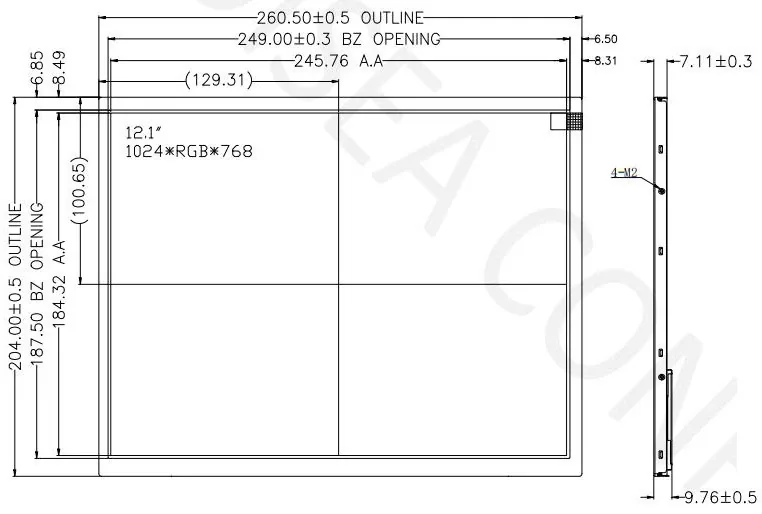
Mechanical reference drawing published with the supplied product material.
The drawing indicates a 260.50×204.00 mm outline, 7.11 mm nominal module depth and 9.76 mm maximum depth. It shows a 245.76×184.32 mm active area; an older module-list row contains a different active-area height, so confirm the current approved drawing revision, pinout and keep-out zones before design lock.
Request the current datasheet and approved drawing before locking enclosure, host-board and optical-stack details.
Use luminance as one input alongside reflection, cover stack, power and thermal conditions.
View high-brightness options →Compare the 4:3 display area, host interface, mounting and operator viewing conditions with the full system.
Explore industrial HMI →Validate backlight power, optical stack and enclosure thermal behavior together.
Read the thermal guide →DISEA standard TFT LCD module list · DS series 2026 V2.1 · PDF, 5 pages, 160 KB.
View the catalog reference (page 4) · Download full catalog ↓
Summary specifications only, not the controlled model-specific datasheet. Confirm the current datasheet, pinout and approved drawing for this exact model before design-in.
The visible mechanical drawing is a reference image. Request the current datasheet, controlled drawing, display timing, connector/pinout and backlight electrical requirements before design-in.
Include the host output, enclosure constraints, application and viewing environment, sample quantity and expected demand. Documentation revision, availability and commercial terms are confirmed during review; the public catalog does not imply stock availability or replace controlled model-specific documents.
Compare related published module configurations. Check the native host interface and sample validation checklist before approving a substitute or custom stack.
Send the host platform, enclosure constraints, target quantity and viewing environment for a fit review.